Cloud
3 SAP Cloud ALM Adoption Mistakes That Put Implementation Value at Risk
– Oct 8, 2026

If you are accountable for an SAP implementation, visibility matters.
You need to know whether critical activities are progressing, whether requirements are being addressed, whether testing is complete, where risks are emerging, and whether the knowledge created during the project will still be useful after go-live.
SAP Cloud ALM for Implementation can provide much of that visibility. But in our experience, the hardest challenges are often not technical. They appear when organizations treat SAP Cloud ALM as a tool to configure at the beginning of the project rather than as a working discipline that needs to be maintained throughout the implementation.
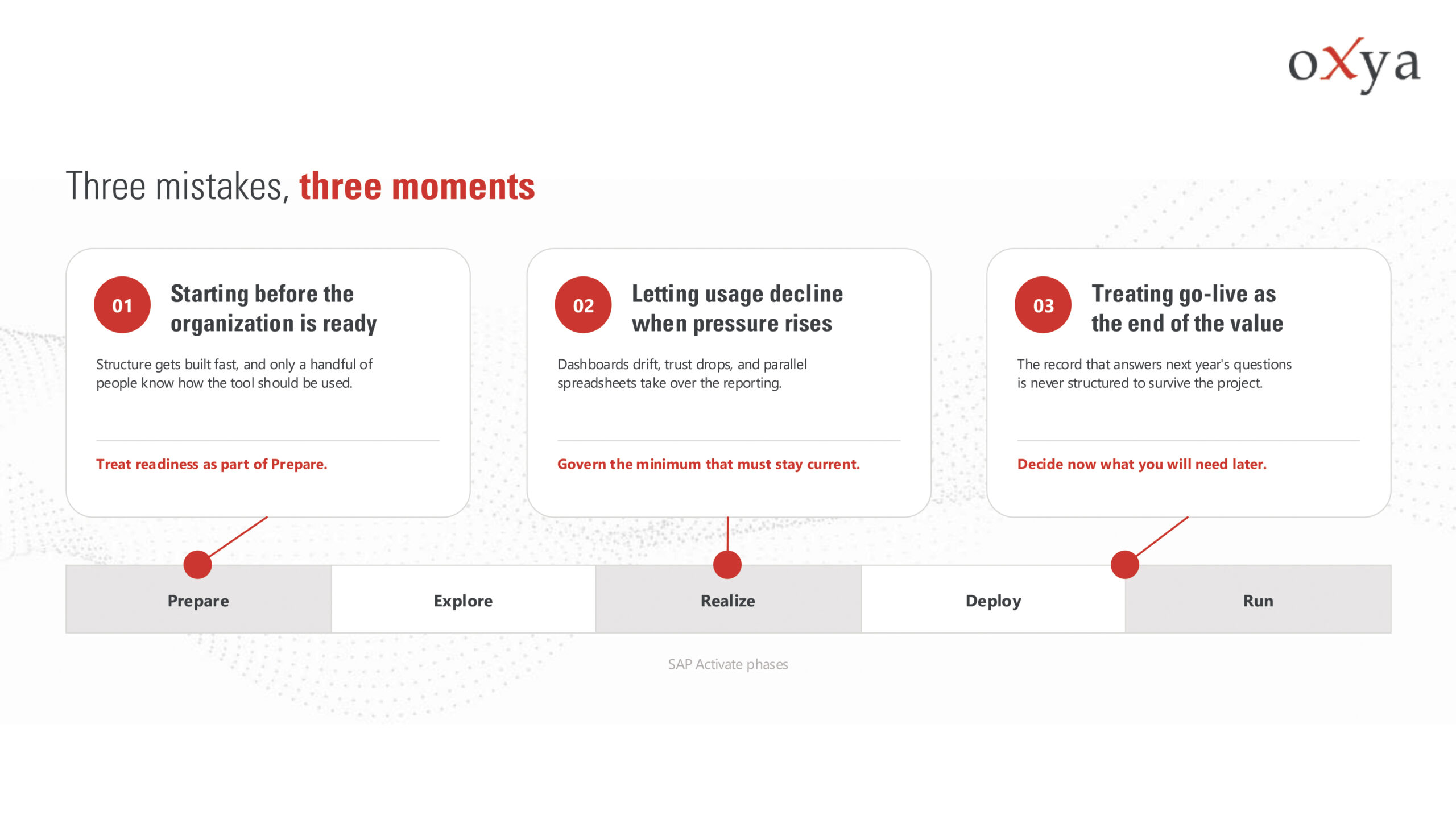
Three mistakes appear repeatedly: starting before the organization is ready to use the tool, allowing usage to decline as project pressure increases, and failing to plan for value beyond go-live.
What is SAP Cloud ALM and why should business leaders care?
SAP Cloud ALM is part of SAP’s integrated toolchain and provides application lifecycle management capabilities for SAP implementations and operations.
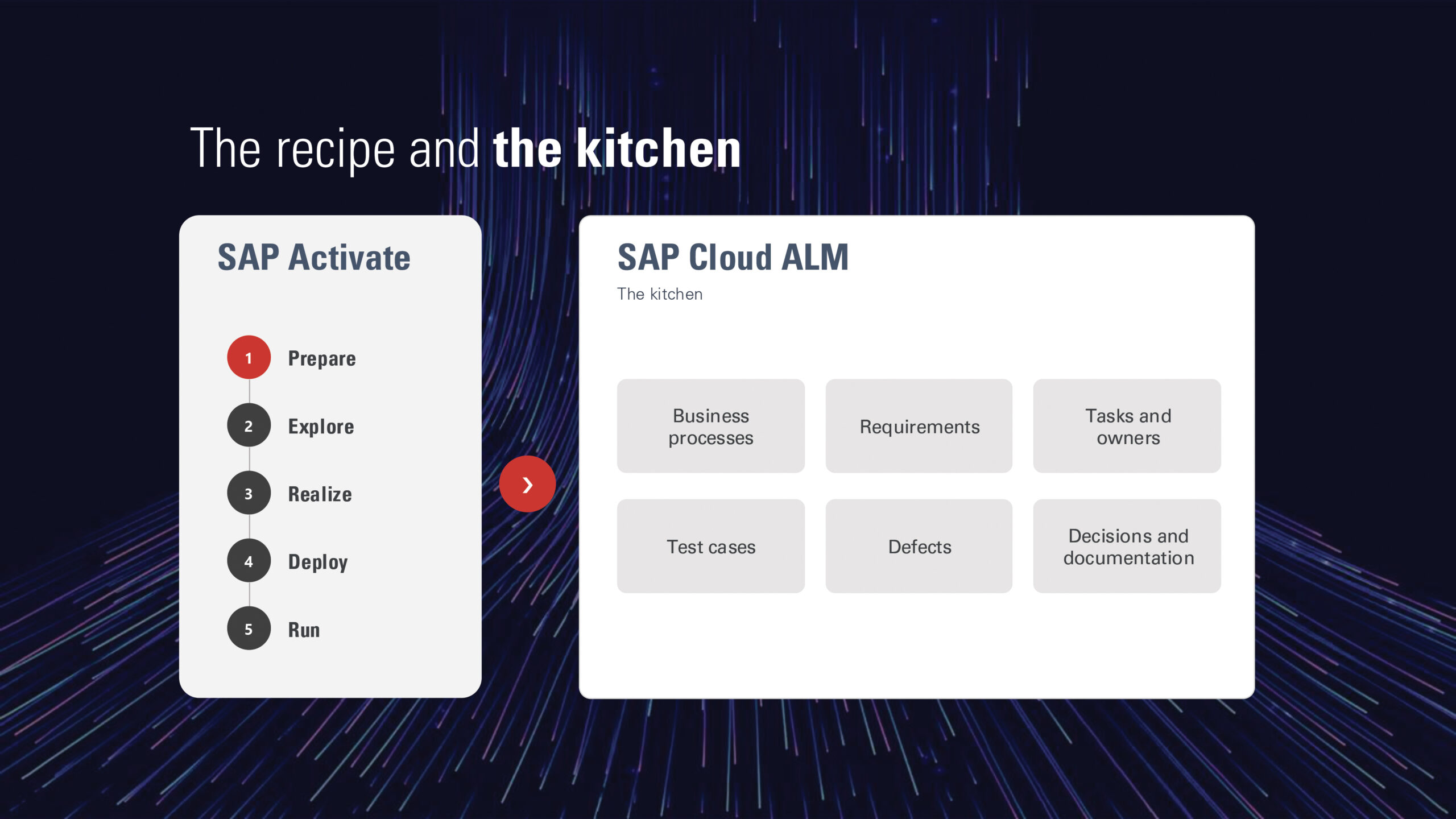
For an implementation, SAP Activate is the “recipe” and SAP Cloud ALM the “place” where the project team organizes, executes, and tracks that “recipe”.
The business value is not the tool itself. It is transparency.
Customers should not have to treat their implementation partner’s methodology and project knowledge as a black box.
With the right structure and disciplined usage, SAP Cloud ALM can give business and IT leaders visibility into what needs to happen, what has been completed, what remains open, and where attention is required.
That helps the customer ask better questions and take greater ownership of the transformation.
Testing is a good example.
SAP Cloud ALM can connect business processes, requirements and user stories with testing activities. Test preparation, execution and defects can then be monitored within the same implementation context.
For a project leader, the important questions are straightforward:
- Which business processes need to be tested?
- Have the required test cases been prepared?
- Which requirements are covered?
- Who is responsible for testing?
- What is complete and what remains open?
- Which defects could affect readiness for go-live?
The objective is not more administration. The objective is better information for better decisions. That value, however, depends heavily on how SAP Cloud ALM is adopted.
Mistake 1: Starting the project before the organization is ready
The period between signing an implementation agreement and starting the project is usually busy.
Teams are mobilizing resources, confirming governance, preparing workshops, establishing environments, defining responsibilities and learning how the project will operate.
SAP Cloud ALM is introduced at exactly the same time.
The predictable risk is that the project structure is created quickly to get started, while only a small number of people understand how the tool should actually be used.
Everyone else learns while project pressure is already increasing.
What should you do instead? How does oXya help?
Treat SAP Cloud ALM readiness as part of the SAP Activate Prepare phase.
Before execution accelerates, define:
- how the project will be structured;
- which information must be maintained;
- who owns that information;
- which roles need access; and
- what each group needs to know to perform its responsibilities.
At oXya, one approach we use is a readiness checklist to identify gaps and risks before they become project issues. We can also support the initial SAP Cloud ALM setup while transferring knowledge to customer administrators and project participants.
The objective is not to make everyone a SAP Cloud ALM expert.
It is to make sure each person knows enough to perform their role correctly from the beginning.
Mistake 2: Letting usage decline when project pressure increases
This is probably the most understandable mistake.
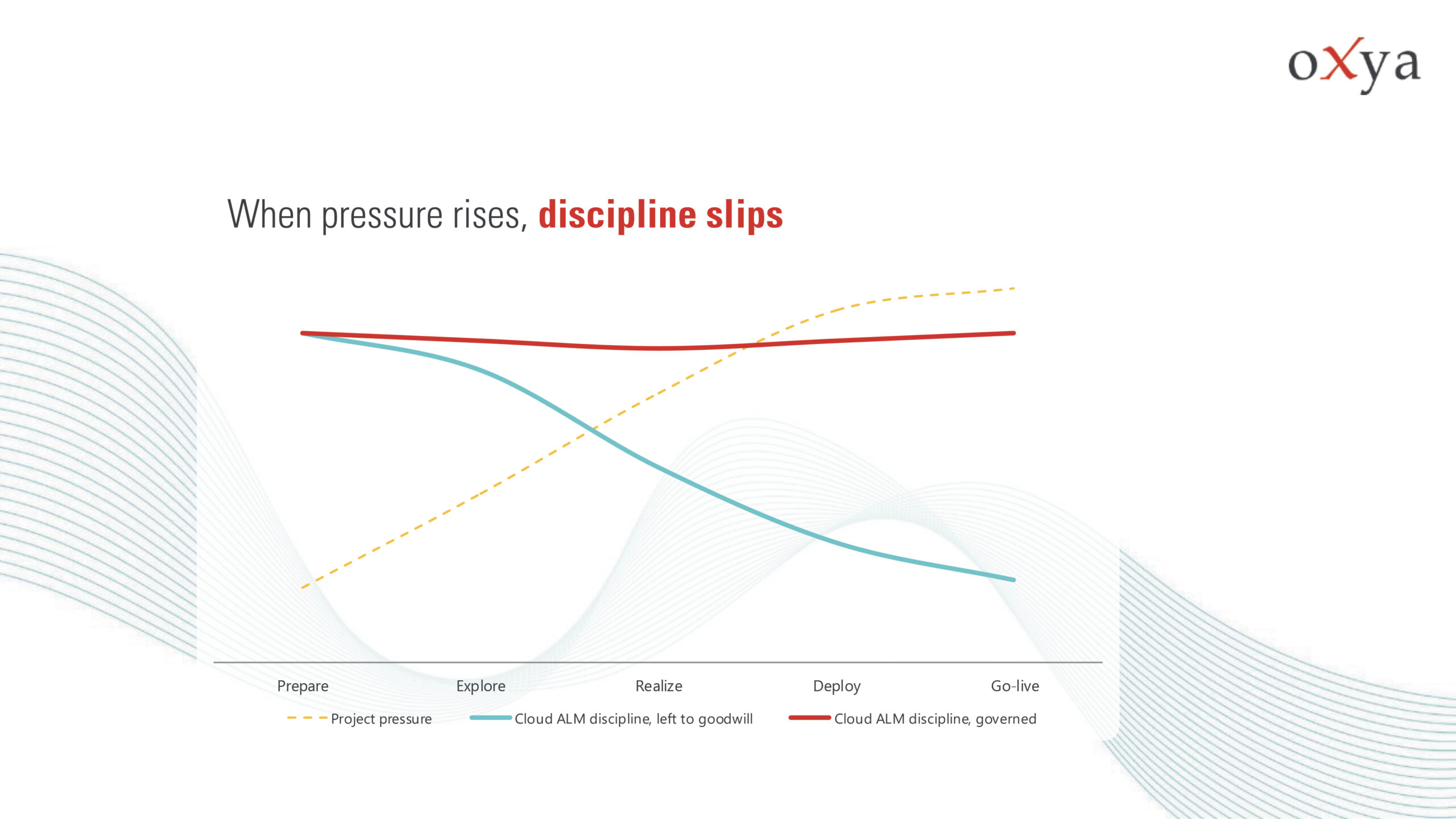
At the beginning of an implementation, maintaining SAP Cloud ALM is relatively easy. Later, workshops, configuration, integrations, developments, testing, defects and deadlines all compete for attention.
Something has to give.
Too often, maintaining project information becomes one of those things.
But this is precisely when reliable information becomes most valuable.
If requirements, tasks, testing activities, defects and decisions are no longer kept current, dashboards become less trustworthy. Once people stop trusting the information, they start creating parallel spreadsheets, presentations and status reports.
The project can then lose the transparency SAP Cloud ALM was supposed to provide.
What should you do instead? Where can oXya help?
Do not rely on goodwill to maintain adoption.
Define simple governance around the information that must remain current:
- Who owns it?
- How frequently should it be updated?
- What information is mandatory?
- How will new project members be onboarded?
- How will you identify when usage begins to decline?
Periodic usage reviews and targeted reinforcement can help. Sometimes the problem is not resistance to the tool; a new team member simply never received enough guidance, or the original process became too complicated to maintain under project pressure.
The objective should be a sustainable operating discipline—not perfect administration. If SAP Cloud ALM remains reliable when the project becomes difficult, it is doing its job.
Mistake 3: Treating go-live as the end of the value
The implementation project eventually ends.
The solution does not.
Requirements, configuration decisions, business processes, test cases, defects and documentation created during the implementation can remain valuable long after go-live.
This leads to one of the most useful questions a project leadership team can ask early in the implementation:
How does oXya help identify what information we will need from this project one or two years after go-live?
The answer should influence how SAP Cloud ALM is structured from the beginning.
A well-maintained implementation record can support future enhancements, regression testing, troubleshooting, knowledge transfer, auditability and onboarding of new team members.
Organizations should also consider how they will transition from implementation into operations.
Beyond the project implementation, SAP Cloud ALM for Operations provides capabilities such as business process monitoring, integration and exception monitoring, health monitoring and real user monitoring. The specific capabilities required will depend on the customer’s landscape and operating model, but that discussion should not begin the week before go-live.
Plan for it earlier.
The goal is to preserve the value of the implementation while creating the foundation for operating and improving the landscape that follows.
Three questions to ask your project team
If you are implementing SAP today, you do not need another complicated framework.
Start with three questions:
- Are the right people prepared to use SAP Cloud ALM before project pressure increases?
- Have we defined the minimum information that must remain current throughout the implementation and who owns it?
- Do we know what information and capabilities we will still need after go-live?
If the answer to any of these questions is unclear, the problem is probably not SAP Cloud ALM itself.
It is the operating model around it. Technology alone does not create transparency. The right governance, behaviors and expertise around the technology do. And that is where much of the real value of SAP Cloud ALM begins.
Before your next project phase or go-live decision, assess your SAP Cloud ALM approach against these three questions.
If the answers reveal gaps, or if you want to take the assessment further, evaluate how your organization is currently using SAP Cloud ALM across key areas of implementation and operations.

Other articles